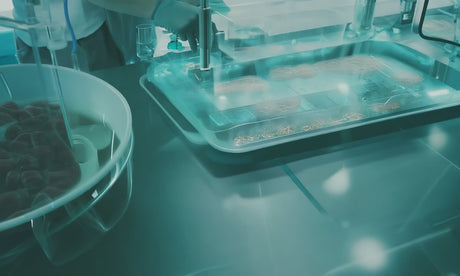
Cultivated lamb is real meat grown from sheep cells in a lab, offering a way to produce lamb without raising or slaughtering animals. It has the same proteins, fats, and taste as conventional lamb, but it’s produced using fewer resources and with no harm to animals. Here's why it matters:
- How It’s Made: A small biopsy from a sheep provides cells that are grown in bioreactors. These cells develop into muscle and fat, forming meat that mimics lamb in flavour and texture.
- Benefits: Producing cultivated lamb uses up to 95% less land, 99% less water, and reduces greenhouse gas emissions by up to 92%. It also avoids animal slaughter and eliminates the need for antibiotics.
- Taste and Texture: It cooks, sizzles, and tastes like lamb. Ground formats like mince and kebabs are currently the easiest to produce, while work continues on replicating whole cuts like chops.
- Environmental Impact: Traditional livestock farming contributes significantly to methane emissions and land use. Cultivated lamb offers a cleaner alternative, with the potential to combat climate change faster by reducing methane output.
Although not yet available in UK shops, companies are working to bring cultivated lamb to market, focusing on mince and burgers initially. This approach could transform meat production, offering a more ethical and resource-efficient way to enjoy lamb.
How Cultivated Lamb Is Made
The Cultivation Process
Cultivated lamb is created by turning a small sample of living cells into actual meat. It starts with a tiny, harmless biopsy, no bigger than a peppercorn, taken from a living lamb. This sample contains stem cells or muscle-specific cells, which act as the foundation for the entire process.
These cells are placed in a bioreactor, where they are nourished with a growth medium packed with essential nutrients like amino acids, vitamins, and minerals. Under these controlled conditions, the cells multiply rapidly. At a certain stage, the nutrient mixture is adjusted to encourage the cells to develop into muscle, fat, or connective tissue.
For cuts like lamb chops or steaks, the cells grow on edible scaffolds made from plant proteins or collagen. These scaffolds guide the cells into the right three-dimensional structure. To give the tissue the texture of traditional meat, it’s stimulated mechanically or electrically, helping it develop the fibrous consistency that consumers expect. Once this process is complete, the meat is harvested and ready for use.
The entire production takes place in a sterile, monitored environment, with sensors and AI systems ensuring everything runs smoothly. This controlled setup not only ensures consistent quality but also significantly lowers the risk of contamination from pathogens like E. coli or Salmonella, which are more common in traditional meat production.
Animal Welfare and Ethical Benefits
This method marks a major shift in ethical practices. Unlike conventional farming, which involves raising and slaughtering animals, cultivated lamb eliminates the need for animal slaughter altogether.
Additionally, because the process happens in a controlled environment, there’s no need for antibiotics, which are commonly used in traditional livestock farming to prevent diseases in crowded conditions. This helps tackle concerns about antibiotic resistance. Strict testing protocols, including checks for nutritional content, toxicity, and microbial safety, further ensure the final product meets high food safety standards.
The Taste and Texture of Cultivated Lamb
Achieving Authentic Flavour
Cultivated lamb is crafted from the same muscle, fat, and connective tissue cells found in traditional lamb, ensuring it mirrors the natural composition that gives the meat its signature flavour.
When cooked, it behaves just like conventional lamb. The Maillard reaction creates that satisfying sizzle and sear, while the oxidation of fatty acids releases the rich aroma lamb lovers recognise.
General Manager Michael Lenahan of Future Meat Technologies (now Believer Meats) shared: "Future Meat's cultivated lamb is indistinguishable from conventional lamb because it is real meat. It sizzles, sears and tastes just like people expect - it's amazing."
What sets cultivated lamb apart is its consistency. Unlike traditional lamb, where flavour can vary based on factors like the animal’s age, diet, or stress levels, cultivated lamb offers a uniform taste. Producers can even fine-tune fat content and distribution, enhancing juiciness and depth of flavour.
Lenahan added: "Since lamb has a distinct flavour, it is very clear if a cultivated substitute is on or off the mark."
Beyond flavour, texture plays a crucial role in replicating the culinary experience of lamb.
Texture Compared to Traditional Lamb
To recreate the marbling and mouthfeel of traditional lamb, fat cells are carefully integrated into the muscle structure.
Professor Yaakov Nahmias, founder of Future Meat Technologies, emphasised: "Fat is the most important cell type to make for the sensory experience of the final product, and our process to produce these cells takes less than 24 hours and has an efficiency of over 85%."
At present, cultivated lamb achieves its best results in ground formats like burgers and kebabs, where replicating texture is less complex. Whole cuts such as chops or shanks remain a challenge due to their intricate fibrous structures. However, ongoing advancements in scaffolding techniques are steadily bridging this gap, paving the way for cultivated lamb to meet consumer expectations as a versatile and ethical alternative.
Meat Lover Tastes Cultivated Lamb (Newform Foods)
sbb-itb-c323ed3
The Environmental Benefits of Cultivated Lamb
Environmental Impact: Cultivated Lamb vs Traditional Lamb Production
Lower Environmental Impact
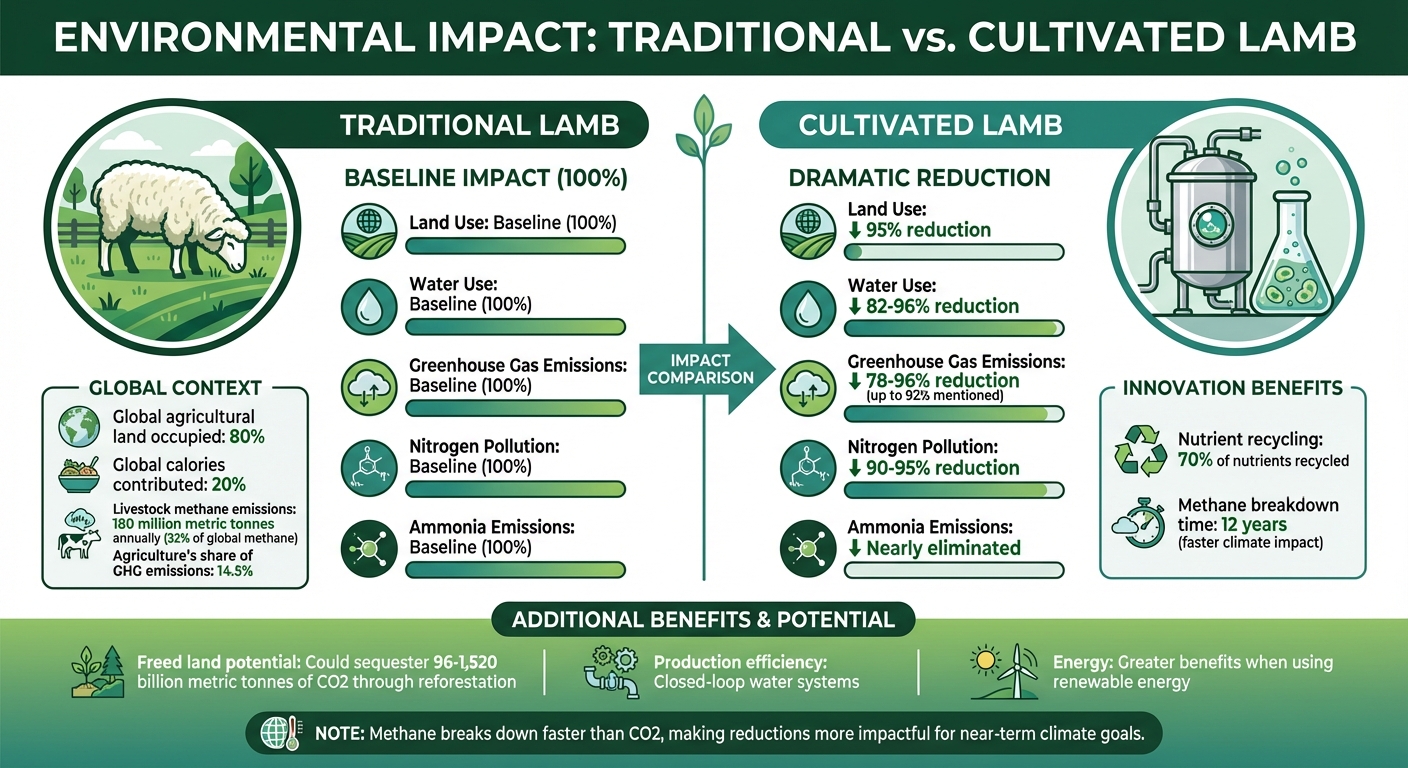
Traditional sheep farming demands an enormous amount of resources, with livestock taking up nearly 80% of global agricultural land while contributing only 20% of global calories [5]. Cultivated lamb offers a radically different approach by growing meat directly from cells in bioreactors. This method slashes land use by as much as 95% compared to conventional ruminant farming [5]. Water usage also sees a dramatic reduction, dropping by 82–96%, thanks to efficient closed-loop systems that replace the thousands of litres typically needed for animal hydration and feed crop irrigation [5].
The benefits don’t stop there. Cultivated lamb production reduces nitrogen pollution by 90–95% and nearly eliminates ammonia emissions [5]. A great example of this innovation comes from Future Meat Technologies (now Believer Meats), which, in August 2022, unveiled the world's first cultivated lamb. Their proprietary media rejuvenation process recycles up to 70% of nutrients within steel fermenters [3][1], cutting down waste and lowering production costs. Alongside these resource savings, cultivated lamb significantly reduces greenhouse gas emissions.
Potential to Reduce Climate Impact
Cultivated lamb isn’t just about saving resources - it also tackles one of agriculture’s biggest challenges: emissions. Animal agriculture is responsible for around 14.5% of global greenhouse gas emissions [5], with livestock contributing approximately 32% of global methane emissions - an eye-watering 180 million metric tonnes annually [3]. By eliminating emissions from enteric fermentation and manure management, cultivated lamb can cut greenhouse gas emissions by 78–96% compared to traditional sheep farming [5].
Methane’s behaviour in the atmosphere makes this reduction even more impactful. Unlike CO2, which lingers for centuries, methane breaks down in about 12 years [5]. This means that cutting methane emissions through cultivated meat offers a quicker way to slow down global warming.
The environmental advantages grow further when production shifts to renewable energy. Additionally, land no longer needed for sheep grazing could be repurposed for reforestation or rewilding projects, creating opportunities to sequester between 96 and 1,520 billion metric tonnes of CO2 [5].
How to Use Cultivated Lamb
Cultivated lamb offers the same rich taste and texture as traditional lamb, making it an easy addition to your favourite recipes. It also comes with the added benefit of being produced through ethical and sustainable methods.
Cooking with Cultivated Lamb
In the kitchen, cultivated lamb behaves just like its conventional counterpart. Whether you're whipping up a comforting shepherd's pie, slow-roasting a shoulder, or grilling kebabs, you can rely on familiar cooking techniques to bring out its flavours.
For a shepherd's pie, swap traditional lamb mince with cultivated lamb mince. Top with mashed potatoes and bake for about 1 hour and 15 minutes. To elevate the flavour, season with classic British aromatics like rosemary, garlic, and mint sauce [7][9][10]. When roasting, you can pierce the meat and insert rosemary sprigs or garlic slivers, just as you would with a traditional leg or shoulder [7]. Tougher cuts, like the shoulder or shank, are ideal for slow cooking. Give them 3.5 to 8 hours on a low heat setting to achieve that tender, fall-apart texture [8][9].
One advantage of cultivated lamb is its consistent flavour, free from the variations often found in traditionally sourced meat [4]. It also absorbs marinades and seasonings exceptionally well, making it versatile for a range of recipes [4]. When preparing cultivated lamb, thaw it in the fridge at 5°C and use it within 24 hours for the best results [2].
Availability and Future Market Outlook
Cultivated lamb is not yet widely available in UK shops, but the market is gearing up for its introduction. Back in August 2022, Future Meat Technologies (now called Believer Meats) announced the successful development of the world’s first cultivated lamb, creating cell lines suitable for products like burgers and kebabs [1]. Between 2021 and 2022, the company managed to lower production costs significantly, from $7.50 per 110g to just under $4.00 per 110g [1].
Closer to home, UK-based companies like Ivy Farm Technologies have been working since 2021 to navigate regulatory requirements and bring cultivated meat to British consumers [1]. Initial offerings are likely to include burgers, kebabs, and mince, as these formats were the first to be scaled successfully [1]. Many brands are also opting to launch their products through restaurant partnerships, allowing them to gather feedback and build consumer trust before making their way to retail shelves [2].
If you’re eager to try cultivated lamb, you can register your interest at Cultivated Meat Shop. The platform plans to offer direct-to-door delivery once the products meet regulatory approval and hit the UK market [2]. Keep an eye out for updates and early access opportunities to be among the first to experience this innovative take on lamb [2].
Conclusion
Cultivated lamb offers the same rich flavour as traditional lamb while addressing pressing ethical and environmental challenges. By eliminating the need for animal slaughter, it tackles welfare issues such as tail docking, castration, and early weaning - practices commonly associated with conventional sheep farming [11]. On top of that, it significantly reduces its ecological footprint, potentially cutting greenhouse gas emissions by up to 92%, using 95% less land, and saving 82–96% more water than traditional livestock farming [4,15].
Since 2019, advancements in technology have made scalable, serum-free production of cultivated lamb a reality. This progress shows that producing real meat can align with both ethical and sustainable values [6]. These developments place cultivated lamb at the forefront of innovation in the food industry, offering consistent taste and improved safety.
"Cultivated meat represents not just an alternative food choice, but a fundamentally reimagined approach to protein production that could transform our relationship with the planet."
The market is also evolving alongside these technological leaps. While cultivated lamb isn't yet available in UK shops, preparations are underway for its arrival. To stay updated on when cultivated lamb will be accessible to British consumers, you can visit Cultivated Meat Shop. There, you'll find updates, waitlist options, and reliable resources to help you navigate the future of meat with confidence.
FAQs
Is cultivated lamb safe to eat?
Cultivated lamb is safe for consumption. It's produced in highly controlled, sterile environments using clean rooms, HEPA filters, and bioreactors to significantly reduce the risk of contamination. On top of that, it undergoes thorough testing processes, such as DNA staining and genetic sequencing, to ensure its safety. Regulatory authorities, including the Food Standards Agency (UK) and EFSA, closely monitor and approve cultivated meat, ensuring it adheres to strict safety standards.
Will cultivated lamb be halal or kosher?
Cultivated lamb's status as halal or kosher remains under consideration by religious authorities. This type of meat is created using animal cells, bypassing conventional farming and slaughter methods. However, its acceptance under religious dietary laws hinges on various factors, such as how the cells are sourced and the methods used during production. Ultimately, religious bodies will decide its permissibility based on these specific criteria.
When will cultivated lamb be available in the UK?
Cultivated lamb is expected to hit the UK market in the next few years. If industry developments stay on track, commercial availability could begin as soon as 2026. Of course, this timeline depends on achieving regulatory approval and successfully scaling up production.