If I had to sum it up in one line: cultivated meat is now past the idea stage, and a small group of founders are pushing it towards sale in the UK.
Here’s the short version for you:
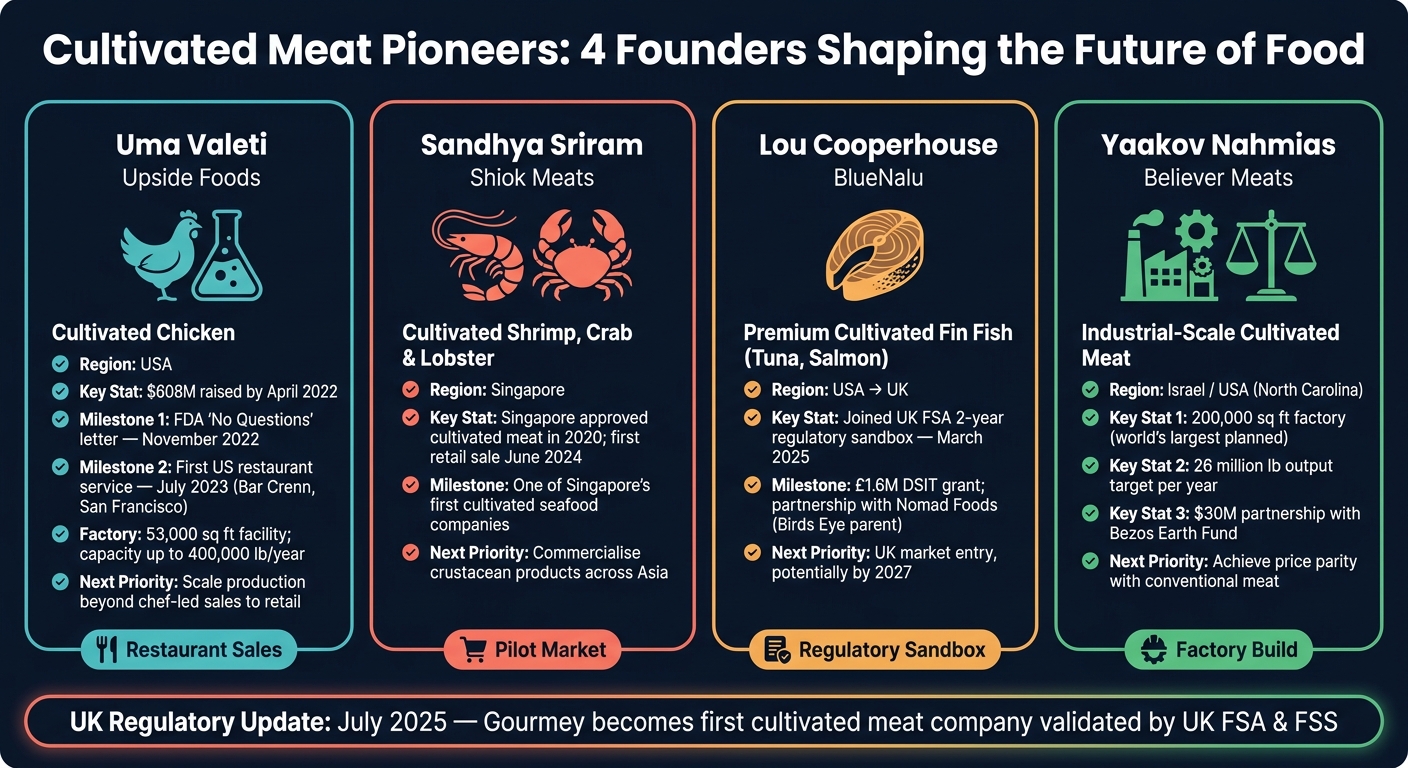
- Uma Valeti at Upside Foods helped move cultivated chicken from lab work to US approval and restaurant service.
- Sandhya Sriram at Shiok Meats focused on shrimp, crab and lobster, showing this field is not just about beef or chicken.
- Lou Cooperhouse at BlueNalu is working on cultivated fin fish and is already inside the UK FSA’s 2-year regulatory sandbox.
- Yaakov Nahmias at Believer Meats is betting on scale, with a 200,000 sq ft factory plan and output targets of 26 million lb a year. This push for volume is central to the bioreactor vs traditional methods cost comparison that will determine market success.
For me, that points to three plain facts:
- Global regulatory approval is starting to happen, first in places like the US and Singapore.
- Seafood is a big part of the story, not just poultry.
- Scale and price now matter as much as the science.
If you’re in the UK, that last point matters most. You’re not waiting on theory. You’re waiting on approval, supply and cost. And there are early signs of movement: in July 2025, Gourmey became the first cultivated meat company to have its application validated by the FSA and FSS in Great Britain.
Cultivated Meat Pioneers: Founders, Products & Milestones Compared
Eating (Cultivated) Chicken After 17 Years Vegan… Here's Why | Dr. Uma Valeti x Rich Roll Podcast
sbb-itb-c323ed3
Quick comparison
| Founder | Company | Main product | Main public milestone | What I’d watch next |
|---|---|---|---|---|
| Uma Valeti | Upside Foods | Chicken | FDA “No Questions” letter in November 2022; US restaurant service in July 2023 | More output and move beyond chef-led sales |
| Sandhya Sriram | Shiok Meats | Shrimp, crab, lobster | Built one of Singapore’s first cultivated seafood firms | Asia-first sales path and seafood rollout as part of the wider cultivated seafood market entry strategy |
| Lou Cooperhouse | BlueNalu | Fin fish | Joined the UK FSA sandbox in March 2025 | UK path to sale, possibly by 2027 |
| Yaakov Nahmias | Believer Meats | Meat production at factory scale | 200,000 sq ft factory project in North Carolina | Lower cost and price match with standard meat |
My take: these founders are shaping what UK consumers may see first - likely chicken and premium seafood, sold in small volumes before any supermarket move.
Case study 1: Uma Valeti and Upside Foods
From cardiologist to cultivated meat founder
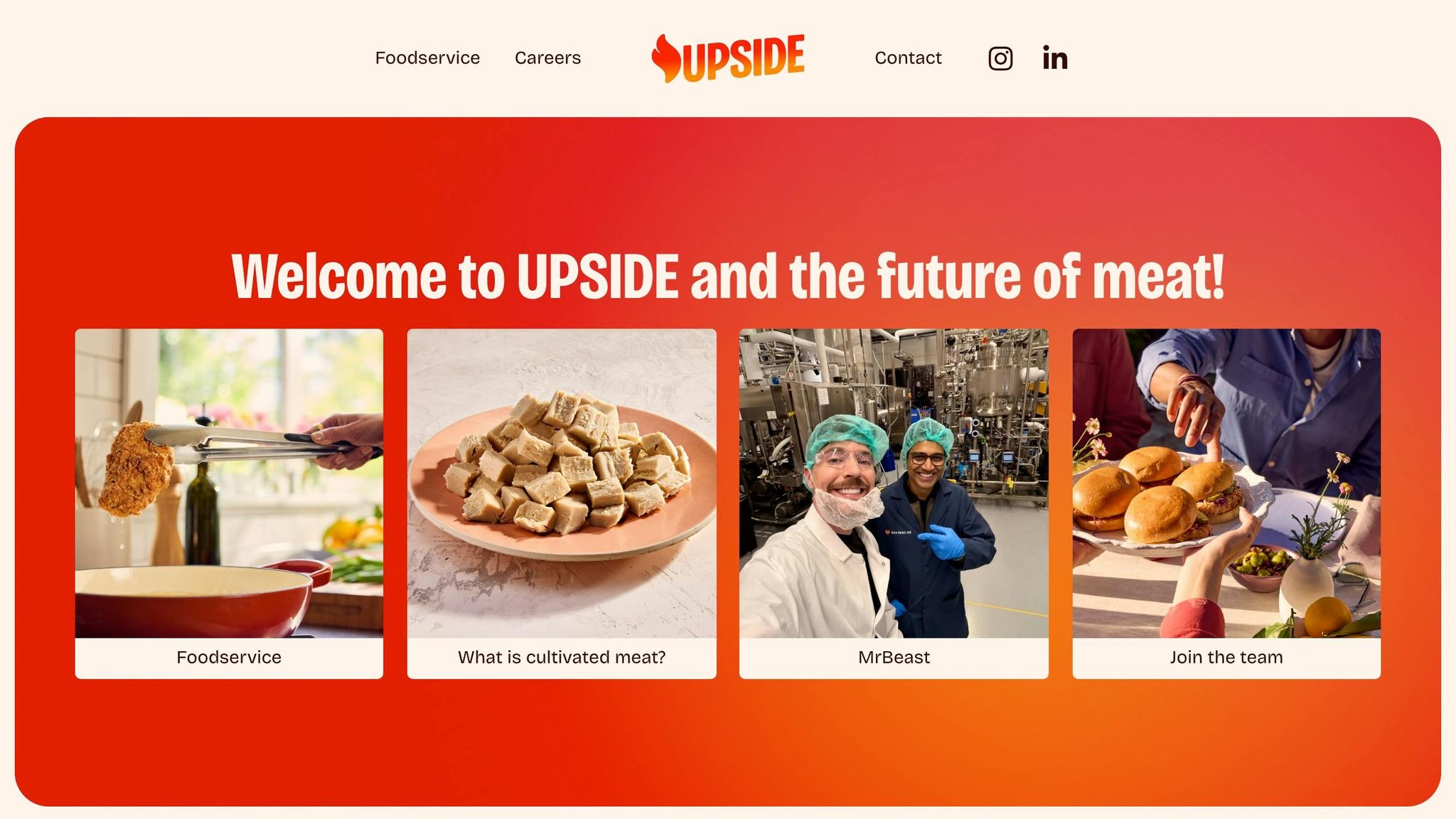
Dr Uma Valeti spent years working as a cardiologist before he co-founded Upside Foods, first known as Memphis Meats, in 2015. His medical training shaped the company from the start. He took cell-culture methods used in medicine and applied them to food.
The goal was simple but ambitious: make meat without asking people to choose between taste and sustainability. What began as an idea didn’t stay theoretical for long. It moved into visible milestones at a fast clip.
Key milestones that marked Upside Foods' rise
Upside Foods hit several early firsts. In 2016, it produced the world’s first cultivated beef meatball. In 2017, it followed with cultivated chicken and duck. Then, in May 2021, the company changed its name from Memphis Meats to Upside Foods, a move that signalled a push towards commercialisation.
In November 2022, Upside Foods became the first cultivated meat company to receive a "No Questions" letter from the US Food and Drug Administration (FDA). That meant the agency accepted its safety data for cultivated chicken. Valeti described the moment as follows:
"This is a watershed moment in the history of food. We started Upside amid a world full of skeptics, and today, we've made history again as the first company to receive a 'No Questions' letter from the FDA for cultivated meat." - Dr Uma Valeti, CEO and Founder, Upside Foods [3]
That step opened the door to its first commercial serving. USDA clearance came in June 2023. A month later, in July 2023, Upside Foods served cultivated chicken commercially at Bar Crenn in San Francisco, the Michelin-starred restaurant run by Chef Dominique Crenn. Earlier, by April 2022, Upside Foods had already become the sector’s first unicorn after raising $608 million [3][4].
What Upside Foods is working towards next
Upside Foods is now focused on production scale at its 53,000 sq ft Emeryville facility. The site is built for an initial capacity of 50,000 lb a year, with plans to increase that to more than 400,000 lb [4][5].
Its route to market has been chef-led. That approach gives the company a way to build trust first, then widen access as output grows. Chicken is still the main product, but the company has also moved into seafood through its January 2022 acquisition of Cultured Decadence [3].
That progress says a lot about where the sector is heading. At this stage, approval and scale matter just as much as invention. For UK readers, that’s the signal worth watching most closely.
Case study 2: Sandhya Sriram and Shiok Meats
Building a cultivated seafood company in Singapore
If Upside Foods took an early lead with chicken, Shiok Meats shows how Cultivated Meat can move into seafood.
Dr Sandhya Sriram co-founded Shiok Meats in Singapore and helped make it one of the first companies focused on cultivated seafood. She pushed the company towards seafood as a clear Cultivated Meat category, rather than a small side experiment.
That timing mattered. Singapore approved Cultivated Meat in 2020, then saw the first retail sale in June 2024. That gave Shiok Meats an unusually early market to launch into. It was also the market where Huber's Butchery recorded the first retail sale of Cultivated Meat products [6].
Why shrimp, crab and lobster became the focus
Shiok Meats chose crustaceans - shrimp, crab and lobster - as its main products. That choice sent a simple message: Cultivated Meat does not stop at beef and chicken.
In practical terms, it opened up a different part of the market. Seafood has its own demand, supply strains and consumer habits, so focusing on crustaceans helped Shiok Meats stand apart rather than blend into the rush around other meat types.
Future plans in Asia and beyond
Singapore's approval and retail milestones provide a roadmap for cultivated meat growth across Asia and beyond.
For UK consumers, that matters. Early movement in Asia may shape which cultivated products reach British menus first. Shiok Meats' progress also hints at where this sector could head next: demand building in Asia first, followed by a broader international push.
Case study 3: Lou Cooperhouse and BlueNalu
A food industry veteran's route into cultivated fish
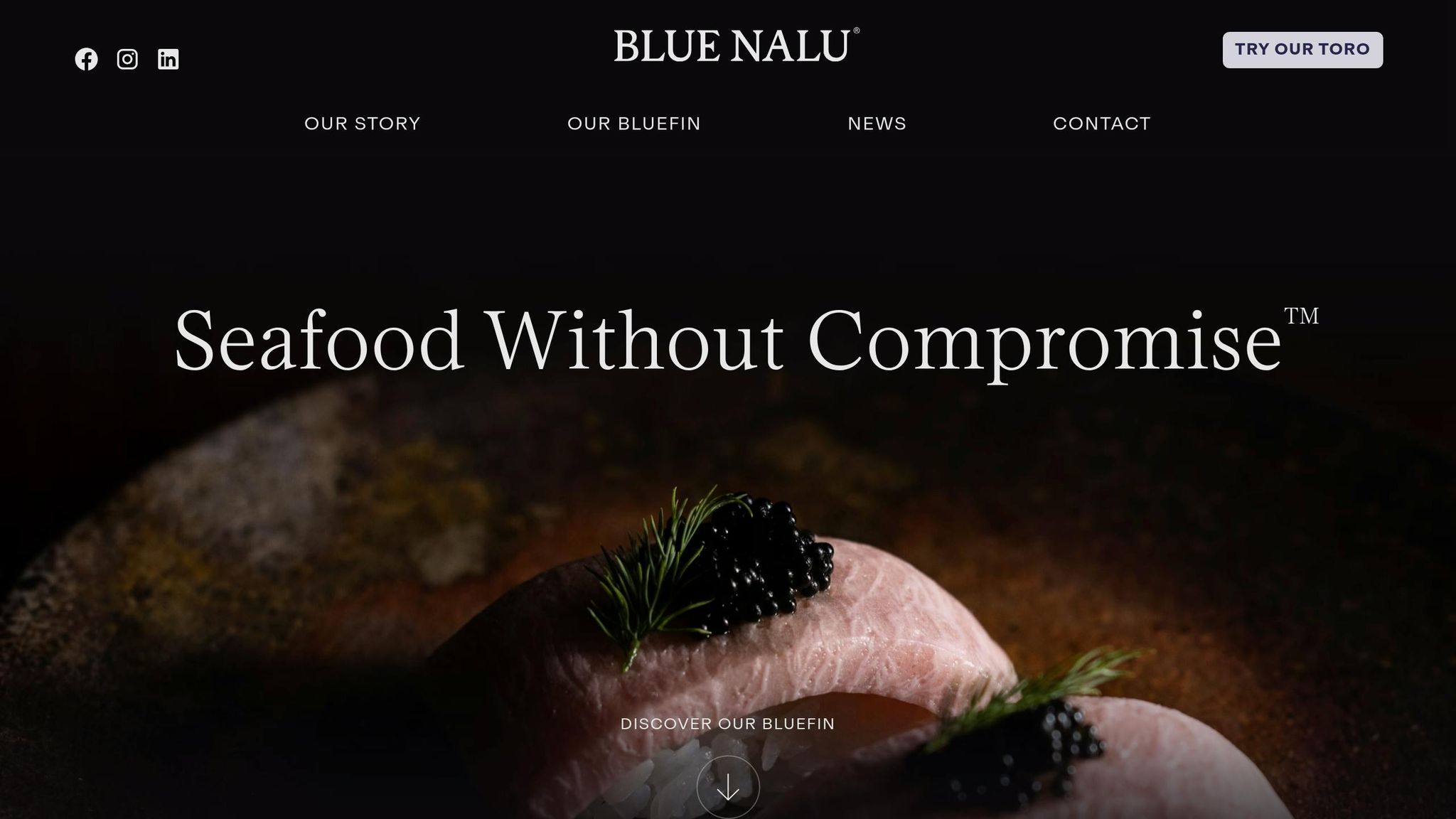
Lou Cooperhouse came into this space from a different angle. He wasn't only shaped by lab science. He brought years of food industry and commercial experience to BlueNalu, a US-based company that specialises in cultivated seafood.[7]
That matters. In a field like this, science is only part of the job. You also need to know how products move through supply chains, how retail works, and what it takes to get food in front of buyers. That's where Cooperhouse gives BlueNalu an edge.
BlueNalu's focus on premium fin-fish products
BlueNalu is focused on high-value fin fish, with tuna and salmon at the centre of that plan.[2] Both are eaten on a large scale, and both face pressure from overfishing and mercury concerns.[2]
The company is also putting its effort into whole fish fillets rather than minced or hybrid products. That's a smart commercial choice. A fillet is familiar. Restaurants know how to serve it, and retailers know how to sell it.
Funding, scale and international ambitions
In March 2025, BlueNalu was chosen as one of only eight international companies to join the UK Food Standards Agency's (FSA) two-year regulatory 'sandbox' programme, backed by a £1.6 million grant from the Department for Science, Innovation & Technology.[7] For BlueNalu, that gives the company a clearer path towards UK approval.
If things move as planned, the sandbox could help cultivated fin fish reach UK shelves by 2027.[7][8]
BlueNalu has also partnered with Nomad Foods, the parent company of Birds Eye, to look at commercialisation in Europe.[7] That gives the business a route into major markets. Now comes the harder bit: turning regulatory progress into actual supply.
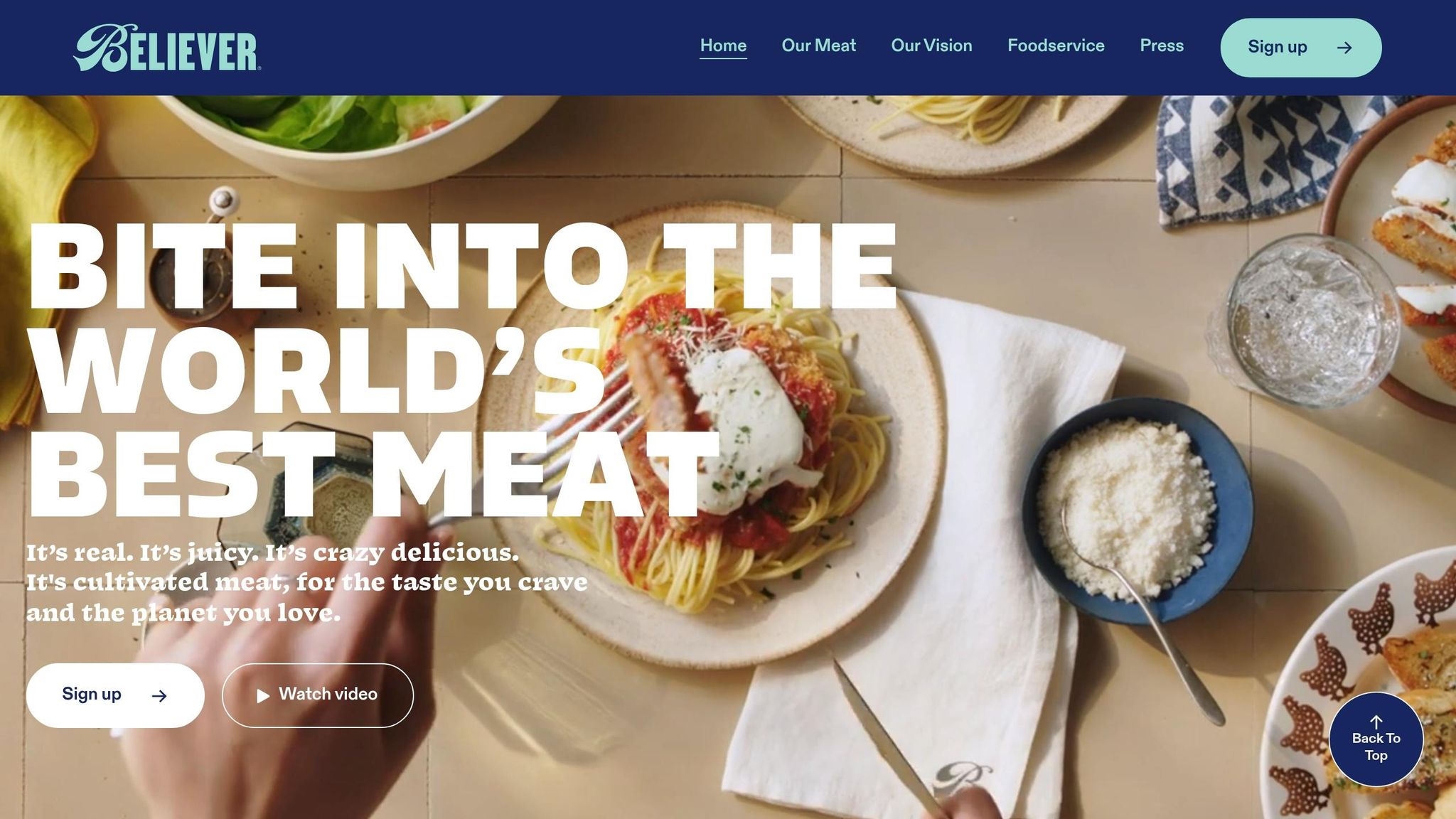
Case study 4: Yaakov Nahmias and Believer Meats
From biomedical research to Cultivated Meat production
While BlueNalu is focused on premium fish, Believer Meats is making a different bet: industrial-scale production.
Yaakov Nahmias comes from a biomedical engineering background, and that shows in how the company thinks about growth. His work at The Hebrew University of Jerusalem helped shape Believer Meats’ engineering-led approach. From the start, the mindset has been clear: build for scale first, then push each next milestone from that base.
Believer Meats' major milestones so far
Believer Meats is building the world’s first 200,000 sq ft industrial-scale Cultivated Meat factory in Wilson County, North Carolina. The site is designed to produce 26 million pounds of Cultivated Meat each year [9].
In 2024, Nahmias also announced a $30 million partnership with the Bezos Earth Fund and North Carolina State University to support the Bezos Center for Sustainable Protein [9].
"The company founded based on our groundbreaking work at The Hebrew University of Jerusalem is leading the charge with the worlds first 200,000 sqft industrial scale cultivated meat factory in Wilson County aiming to bring our 26 million pounds of cultivated meat annually." - Yaakov Nahmias, Founder, Believer Meats [9]
Big factory plans and major funding sound good on paper. But there’s a tougher issue sitting underneath all of it: cost.
Why price and availability are central to the next stage
Believer Meats is putting its weight behind industrial-scale infrastructure with a clear aim: bring costs down and get Cultivated Meat in front of more people.
That makes the next stage pretty direct. The company now needs to push on:
- lower costs
- price parity with conventional meat
- wider availability
That’s the part that will show whether scale can move Cultivated Meat from a promising idea into an everyday product.
What these pioneers tell us about the future of Cultivated Meat
Taken together, these case studies point to a clear shift. Cultivated Meat is spreading across species, markets and production models. Four founders, four different starting points, but one shared direction: Cultivated Meat is moving beyond proof of concept and into factory-scale production.
Uma Valeti started in cardiology. Sandhya Sriram built a seafood business in Singapore. Lou Cooperhouse brought deep food industry experience to premium fish. Yaakov Nahmias used biomedical engineering to tackle industrial scale. Different backgrounds, same push forward.
Comparison table: founders, products, milestones and next priorities
The table below gives a quick snapshot of where each pioneer is focused, what they have achieved, and what comes next.
| Founder & Company | Primary Product | Region | Notable Milestone | Next Priority |
|---|---|---|---|---|
| Uma Valeti (Upside Foods) | Cultivated chicken | USA | First USDA/FDA clearance; first restaurant service in San Francisco [1] | Scaling production to reach retail markets |
| Sandhya Sriram (Shiok Meats) | Cultivated seafood (shrimp, crab) | Singapore | Operating in Singapore, the first country to approve Cultivated Meat for sale [1] | Commercialising cultivated crustacean products across Asia |
| Lou Cooperhouse (BlueNalu) | Premium finfish | USA | Large-scale factory designs developed for cultivated seafood [2] | International expansion and premium seafood market entry |
| Yaakov Nahmias (Believer Meats) | Cultivated meat | Israel / USA | Production gains aimed at lowering costs [1] | Achieving price parity with conventional meat by overcoming production challenges |
These founders show two main routes to market: mass-market chicken and premium seafood. That split matters. Different routes will reach UK consumers according to different availability timelines, and likely through different channels too.
Why UK readers should pay attention now
Cultivated Meat is not yet on UK supermarket shelves. Even so, the regulatory picture is starting to move. In July 2025, French company Gourmey became the first Cultivated Meat business to have its application validated by the UK Food Standards Agency (FSA) and Food Standards Scotland (FSS) [10]. That is a meaningful sign that the UK approval pathway is open and progressing.
"We are proud to announce that Gourmey is the world's first cell-cultivated meat company to have its application validated in Great Britain." - Nicolas Morin-Forest, CEO, Gourmey [10]
This is a global field, and progress has not been even. Still, these companies are already well into pilot-plant and factory-scale development. For UK readers, that makes this more than a distant idea. A clearer view now will make it easier to judge Cultivated Meat when it starts reaching the UK market.
FAQs
Why are seafood pioneers important in Cultivated Meat?
Seafood pioneers matter in Cultivated Meat because they bring a useful point of view that many other leaders share: the food industry needs to move past simply copying the meat products people already know.
Instead of stopping at one-to-one replacements, they’re helping shape new product formats that fit how people eat now, and how they may eat in the future. That shift can help change consumer behaviour in ways that support a more sustainable food system.
It also makes cultivated meat easier to put into practice, easier to access, and more appealing to people around the world.
Which founder is closest to reaching the UK market?
The available sources do not name one founder as the person closest to entering the UK market.
A few firms do appear to be moving in that direction. Aleph Farms has signalled international expansion and work with regulators, while Uncommon is based in Cambridge. But based on the sources here, there’s no clear statement on which founder is furthest along in the UK process.
Cultivated Meat Shop helps consumers stay informed as Cultivated Meat moves closer to market.
What still needs to happen before Cultivated Meat becomes affordable?
To hit price parity with conventional meat, the industry needs to bring down the cost of growth media. Right now, that still accounts for most production spend. A big part of the job is swapping expensive animal-derived ingredients for lower-cost plant-based options.
It also needs better bioprocessing and much larger bioreactors. On top of that, simpler production methods would help cut labour, waste and capital costs as output grows.